 ,A common goal for junior golfers learning the sport is to join a high school team. Quite honestly, since we live in FL it is something that both Coach Danni and I discuss with our teen golfers quite often. For those who are serious about it, we adjust our lessons accordingly and also encourage them to become a real student of the game so they can become a leader on their team. Since 2017, Beaver Golf has developed many high school players and some of those high school players also play in competitive tournaments, check out the video below. Not all high school players are competitive tournament players and not all competitive tournament players play on high school teams but both provide great development opportunities depending on the goals of your golfer. In like manner, high school golf coaches and golf coaches like Coach Danni and myself provide different development opportunites for your golfer. A high school golf coach is generally going to oversee the tryout process, select players that will best represent their school and develop a team environment. Most high school golf coaches have a love for the sport but they are not trained as golf professionals nor is it their full-time job; making it very important to maintain your schedule of private lessons with Coach Danni or myself. In rare instances, a high school golf coach may be trained as a golf professional and they use the opportunity to convert the high school players into their private students. While this can be a great marketing tool, it can easily become an unethical practice when the coach fails to recognize that the player already has a golf coach. It is easy to fall prey to their promises especially, if they are offering bells and whistles that you think your golfer needs. In the past, a couple of junior golfers have made the decision to leave Beaver Golf and work soley with their high school coach or simply coach themselves but that decision has been detrimental to their golf aspirations. Bells and whistles do not guarantee progress. Solid coaching practices coupled with a player who is committed to doing the work is a better bet. Now, if the high school golf coach is reputable, they will accept the fact that the golfer has a coach and may offer general guidance to the golfer. The key in these instances is to always share those tips with Coach Danni or myself to ensure that long-term goals are not compromised. If your golfer is considering playing for a high school team, please speak to Coach Danni or myself before making any decisions. Coach Danni played for Oxbridge Academy so she brings a personal element to this important decision making process that is invaluable. One last note, always be sure that any golf coach that you are considering is in good standing with our local First Tee office. 
Annika Collado was selected to attend a First Tee Leadership Summit in Atlanta hosted by the PGA Superstore in June. Here's what she had to say about the entire experience:
A pre-requiste for applying to the Leadership Summit is participation in the Leadership Series at the PGA Superstore in Palm Beach Gardens. How was that experience? The leadership series at the PGA Superstore gave me the opportunity to not only meet some great people within my local First Tee chapter but also to see how important leadership is to create a successful and positive environment in a work place. The 6-week class was very beneficial and I encourage others to do it if given the chance.
Once selected to participate in the Leadership Summit what expectations did you have for the event? Were those expectations met?
I wasn't sure at all what would be part of the Leadership Summit. I just knew I'd be able to understand how to become a better leader. The trip, however, blew my expectations away! I met some great people from all around the country that were just like me. We have continued to stay in contact and we are building strong friendships even after the event. It also was an incredible opportunity to meet with successful leaders that apply their core values to shape their companies which allows them to be successful. More importantly, they are making the world a better place through the work that they do. From CEOs to NFL managers, we heard about how important good leadership is especially when turning failure into success. I will never forget the opportunity. It was a once in a lifetime experience and I am extremely grateful for it.
While at the Summit, you were able to hear from leaders representing different fields. What speakers impacted you the most?
The first most impactful speaker would be Mr. Ralph Stokes. He is a board member for the PGA Superstore and he is the person who advocated for this experience with First Tee. He had a massive impact on me because he encouraged all of us to make the most of the experience we were given and to have fun. Mr. Stokes also attended all of the events with us so we could get to know him more. True to his encouragement he always had fun and his jokes made us laugh a lot. Another impactful speaker was Mrs. Maya Moore, a professional basketball player who has won countless national championships. It wasn't specifically her professional sports career that made her so impactful to me but why she stop playing at the height of her career. Mrs. Moore learned that someone from her hometown had been wrongfully imprisoned and she decided to invest her time and money to get him freed. This man eventually became her husband and they now have a son together. One of her challenges was going from being the best in her career to taking on a task where she essentially knew nothing. She had to overcome not being the best by trusting people who were the best in their field, the legal arena, in order to be successful.
Any final thoughts?
The Leadership Summit was an incredible once in a lifetime opportunity. When I wasn't learning from some great leaders, I had a blast! We did so much: ziplining, office mini-golf, soccer, Civil Rights Museum and other stuff I can't remember right now. Sharing this experience with the other participants that I now call friends made it even better. Overall, it was an amazing time and I can't recommend it enough. 
We absolutely love creating opportunities for our graduating seniors to share their experiences with younger golfers. Last month, when we invited Nate Vertes to speak along with his Mom so our Thursday evening class could hear both perspectives. Mrs. Vertes spoke about perseverance and how Nate was able to apply the core values even moreso after attending the leadership academy last summer. Nate encouraged the golfers to stick with First Tee because the benefits go beyond learning golf.

What Nate didn't know was that Zack Anderton from the local First Tee office would also be on site to video the entire experience. Once the talk was complete, Coach Glen presented Nate with a special gift from First Tee. After opening the box, Nate discovered that he won a National Scholarship from First Tee in the amount of $20,000!!
While it was difficult for the younger golfers to really understand what had happened, they understood that $20,000 is a lot of money. For some of the pre-teens it was an eye-opening experience. Junior Coach Annika was very excited for her friend. She will be a senior next year so she has her eye on the prize.

The Western Golf Association (WGA) and amateur golfer Charles "Chick" Evans Jr. established the Evans Scholarship in 1930. The scholarship has helped thousands of caddies attend college since then. Beaver Golf student, Jayda Dookie graduated from Suncoast Community High School in 2023 and she was awarded the scholarship after completing her "loops" at Seminole Golf Club.
The word “loop” can be a verb or noun. As a noun, it's a caddie's round of golf service. Makes sense; the round begins and ends at the clubhouse, so the route golfers and caddies traverse is basically a loop. As a verb, “loop” means to lug a player's bag around a golf course. Consequently, “looper” is slang for caddie.
Read the stories that follow to learn more about the experience. The best time to get started is during the golfer's freshman year of high school but it is not impossible to complete the loops if you start in your sophomore year.
The Evans Scholarship is valued at more than $125,000 over four years.
Jayda took full advantage of the opportunities available to her in golf!
If you keep your arm straighter you will be able to get to impact zone easier. Great putting tips from Rory McIlroy. Focus on balance and avoid going to your toes. |
AuthorGlen Beaver 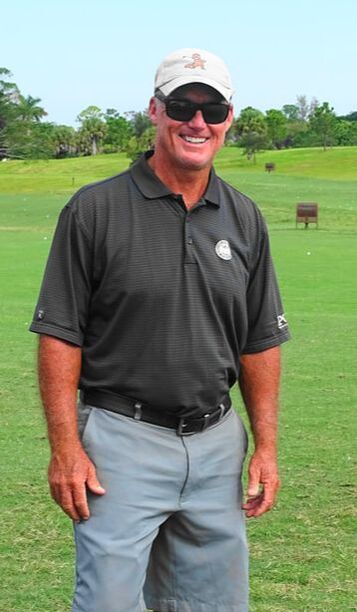
Categories
All
|


